Our UX and Accessibility News section is your daily source for the latest user experience news, design trends and accessibility updates. Whether you are a UX designer, product manager, developer or researcher, we deliver breaking industry headlines, in-depth analysis and practical insights on usability, interface design, user research and inclusive design. Every article is curated to help you understand emerging technologies, new tools and shifting standards, so you can build digital products that people genuinely love to use. From AI-driven design to mobile-first strategies, our UX news keeps you informed, inspired and ahead of the competition. We focus on the stories that matter most to your work, explaining what each change means for real projects, so you can respond quickly and design with confidence in a fast-moving industry.
Go beyond the headlines with expert tutorials, case studies, tool reviews and accessibility guides. Our coverage includes WCAG compliance, accessibility testing and user-centred design best practice, helping you improve conversion rates, boost customer satisfaction and create experiences that work for everyone, including users with disabilities. Our expert writers and industry contributors ensure every story is accurate, timely, relevant and genuinely useful, whether you are updating a design system, planning user research or preparing for new accessibility regulations. Join our growing community of UX professionals, explore trending topics in user experience and web accessibility, and subscribe to our newsletter so you never miss an update. With trusted reporting and actionable advice, we make it easy to follow the UX and accessibility news that shapes better, more inclusive digital experiences.

Trust Is the Currency, Knowledge Is the Engine
What Mastercard’s AI lead understands about enterprise transformation that most organizations are still missing. Federico Cohen Freue fields roughly a thousand AI requests a year. That’s the incoming volume to Mastercard’s central AI and data team — proposals, ideas, and asks from across a global enterprise trying to figure out…
Read more
Gamification 2.0. Beyond Points and Badges: Designing for Players, Not Metrics. Chapter 3: The Framework
Part 3 of the “Gamification Series.” Genre matters: the missing framework Here’s the most important thing most gamification designers miss: there is no single “game psychology.” When a product team says, “Let’s add gamification,” they’re making the same mistake as saying, “Let’s add music,” without specifying what kind of music.…
Read more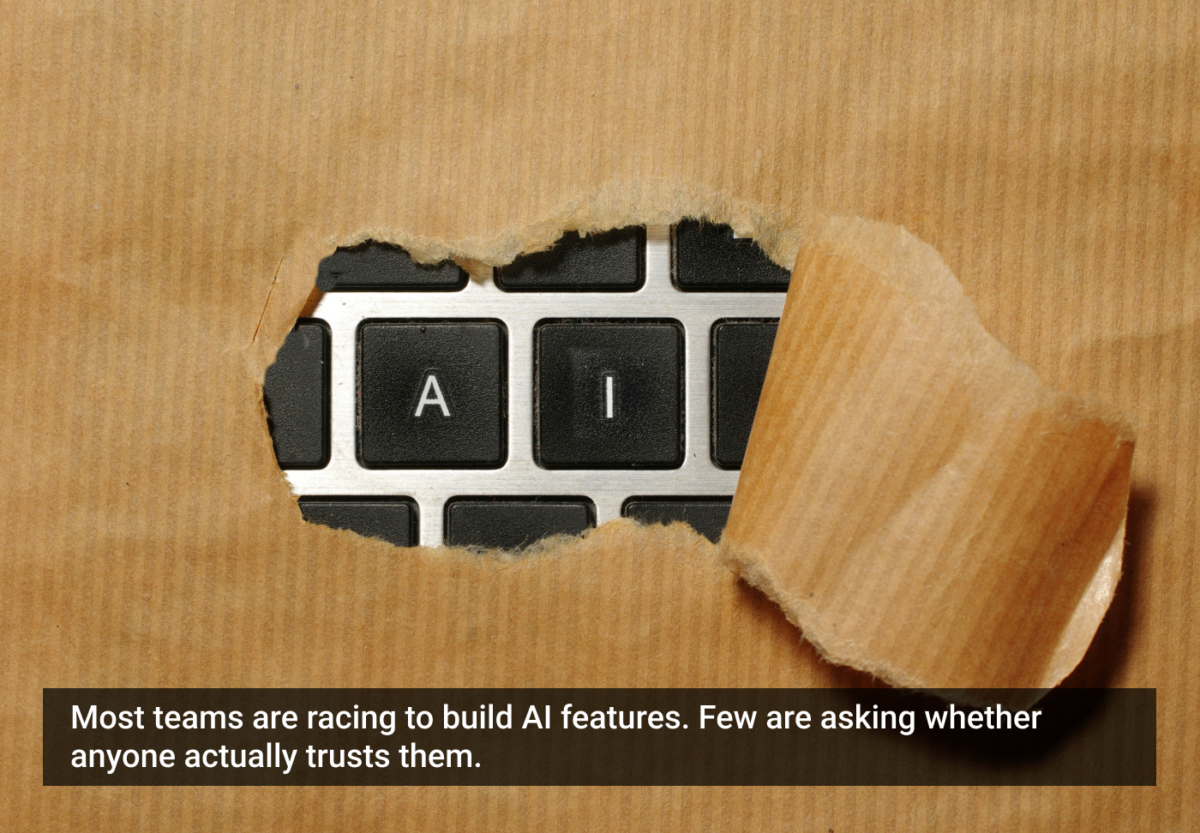
Making the Invisible, Visible: 6 Months of Diving Deeper into AI
What I didn’t do I have not vibe-coded, crafted the perfect prompt, created a skill to use, or [insert any trending thing right now]. Not because I’m not interested — believe me, it’s tempting. But my focus has been elsewhere. It simply hasn’t aligned with my goals and needs. Not…
Read more
Real AI Strategy Isn’t a Vendor Bake-Off
Brian Evergreen on why agentic AI rewards vision-first strategy, and why your RFP is built for a world that no longer exists. The first question is almost never the one on the slide. In a recent conversation on Invisible Machines, Brian Evergreen, founder of The Future Solving Company and author…
Read more
Gamification 2.0. Beyond Points and Badges: Designing for Players, Not Metrics. Chapter 2: The Solution
Part 2 of the “Gamification Series.” Gamification 2.0: Learning from actual game design Let me tell you what actually hooks players, drawn from four decades of watching millions of people play games I’ve worked on. The shift in thinking Gamification 2.0 requires three fundamental pivots: Core principles of real game…
Read more
The Spiral Climbs: Ideas Are Expensive, Systems Are Cheap
History doesn’t loop; it climbs the same corners to a higher floor. The spine stayed the same: Critical thinking, research, communication, empathy. What changed is the distance. The idea of coding is now a short walk. Live artifacts beat static decks, agents sit inside our tools, feedback lands faster, and…
Read more
Gamification 2.0. Beyond Points and Badges: Designing for Players, Not Metrics. Chapter 1: The Problem
Part 1 of the “Gamification Series.” The gamification cargo cult Let me tell you about a phenomenon I see everywhere: apps with “gamification” that no actual gamer would tolerate for five minutes. Duolingo guilt-trips you about broken streaks. LinkedIn congratulates you for reaching “All-Star Profile” status — a meaningless label…
Read more
AI Fails Silently: A Systems Perspective on AI Reliability
Traditional systems fail loudly. AI systems fail silently. That distinction is not philosophical. It is operational, and it fundamentally changes how systems must be designed, monitored, and understood. Traditional monitoring doesn’t translate In deterministic systems, failure is explicit. A service returns an error. A threshold is breached — an alert…
Read more
Designing Small Is Harder than Designing Big
After 10+ years working in Agile marketing teams, I thought I understood Agile. Then I started studying UX and realized I’d been looking at it from the wrong angle. When people talk about working on agile teams, they often describe the challenge as a matter of speed. Everything moves faster.…
Read more
Consent Fatigue: Are We Designing People into Compliance?
Part 10 of the “Ethical UX Series.” The illusion of consent “The best way to take control is to make people believe they’re making their own decisions.” — Frank Underwood Consent, in its truest form, is about empowerment. It signifies mutual understanding, agreement, and a transparent relationship between user and…
Read more
The Real Reason Your Design Team Burns Out (And How to Fix It)
Your design team isn’t burning out from work. It’s burning out from friction. The fix isn’t more effort; it’s better DesignOps: clarity, mentorship, and flow. Everything sounds like work… until you listen closer. It’s 9 AM. The coffee’s on. Some of us are at the kitchen table. Others are in…
Read more
A Job Is Not Just a Bundle of Skills
What Evan Ratliff learned from running a company staffed by AI agents and what it reveals about the work we can’t see. Evan Ratliff is an investigative journalist and the creator of Shell Game, a narrative podcast that has become one of the more honest experiments in what AI actually…
Read more
The Map Is Not the System
On sensemaking, the stories organizations tell themselves, and why crisis is sometimes the only thing that reveals the truth. There is a room in California that, for years, everyone called the call center. During the pandemic, California’s unemployment system buckled under a volume it had never been designed to handle.…
Read more
The Psychology of Nudges: Why the Smallest Design Element Can Shift the Biggest Outcomes
Part 9 of the “Ethical UX Series.” What is ethical UX, and why does this series exist? At the heart of WorldUXForum, we believe that design is not just about functionality or aesthetics — it’s about responsibility. Every pixel, interaction, and pathway we craft shapes user behavior. The “Ethical UX…
Read more
Attention Engineering: Why Users Ignore Even the Most Important Elements
Part 5 of the “User Psychology Series.” Over the last four chapters of the “User Psychology Series,” we have explored how users think, feel, decide, hesitate, trust, and drop off. Each article revealed a deeper truth: users do not behave according to design logic — they behave according to psychological…
Read more
The Illusion of Choice: How Micro-Decisions Guide Macro-Control
Part 8 of the “Ethical UX Series.” “The greatest enemy of freedom is a happy slave.” — Friedrich von Schiller What is “ethical UX,” and why this series matters In the design world, we often speak about empathy, innovation, and delight. But underneath the surface of many successful interfaces lies…
Read more
The End of Prompting: Why the Future of AI Experience Design Is Constraint-First
There is a point in each technology cycle when the workaround turns into the product. We saw it when spreadsheets displaced paper ledgers and then became the planning tool. Emails supplanted memos, which then became the management layer. And now we’re watching that happen with prompting. Prompting was never meant…
Read more
Inclusive Login Starts at the First Step
How often does a login fail even when someone is trying their best? We have been spending more time thinking about inclusivity in the parts of a product that people touch most often. Login is one of them. It appears constantly, is usually justified under security requirements, and often causes…
Read moreEvolving the User Experience to Curb Digital Addiction
By Nitin Kumar Over the last decade, the ways in which we experience technology have undergone significant changes. We’ve progressed from checking our email messages in a computer’s Web browser to receiving email notifications on our smartphone. Instant-messaging communication has transitioned from chatting on the desktop application Yahoo Messenger to…
Read moreThe Power of Textual Content in UX Design
By Shalini Samuel Digital experiences get better through user-centric design. Among the various elements that contribute to a seamless user experience, do not underestimate the role of textual content. When you use text strategically, it can improve the brand value of a product, Web site, or application whether by guiding…
Read moreEmpowering the User Experience Through Microinteractions: 7 Best Practices
By Syed Balkhi Microinteractions are small, yet powerful interaction-design elements that can fundamentally shape how users interact with a digital product. They are critical components that can make a product more user friendly and engaging. In this article, I’ll explore the concept of microinteractions and how they can enhance the…
Read moreHow Web-Site Design and Social Media Work Together
By Val Razo While social media has taken center stage in terms of marketing priorities today, every successful business knows that Web-site design and social-media marketing should work in concert. Building a brand is all about consistency—so it’s important for a business’s Web-site design to align with its social-media content…
Read moreDesigning for the User: How Form Insights Shape UX Design Decisions
By Mike Hakob Form insights serve as the foundation for creating smooth, user-friendly digital experiences and highlight the importance of the user experience for business Web sites and apps. In this article, I’ll explore the concept of form insights and examine some techniques for gathering and evaluating user data. I’ll…
Read moreConversational AI Search Engines: Implications for Usability and the User Experience
By Silvia Podesta In February 2024, Fast Company [1] reported on the rise of conversational AI search engines. Large language models (LLM) power these tools, which can answer users’ questions by retrieving and summarizing information from the Internet. Since the rise of generative AI, several conversational AI search applications have…
Read moreDesigning for Mobile Accessibility: Enhancing the User Experience on Small Screens
By Magnus Eriksen In the span of just a few years, mobile devices have gone from being useful gadgets to essential lifelines. They seamlessly bridge the gap between the physical and digital realms, making information and services readily accessible to their users at all times. And yet, our appreciation of…
Read moreFostering Inclusive Design in Industrial Automation, Part 2
By Jonathan Walter and Amber Westlund In Part 1 of this series, we defined inclusive design and acknowledged its ever-growing impact, including on industrial automation. We then described inclusive design challenges in industrial automation and previewed how we solve them. Now, in Part 2, we’ll delve more deeply into a…
Read moreHarnessing the Power of User-Generated Content in eCommerce
By Danika Kimball In the world of ecommerce, creating a seamless, highly engaging user experience is paramount. One thing that can significantly enhance the user experience is user-generated content (UGC). UGC encompasses a wide range of content, including customer reviews, photos, videos, and social-media interactions, all of which can transform…
Read moreAchieving Design Collegiality While Maintaining Psychological Safety
By Pratik Joglekar Creating a collaborative, inclusive atmosphere on a Design team is essential to promoting psychological safety and the mental well-being of all team members. This requires fostering open communication and mutual respect, while developing a harmonious, supportive ambiance that encourages creativity and originality. Cultivating a safe space in…
Read more
We stand with Ukraine. Here are ways you can help.
Ukrainian people are among the many contributing authors, volunteers, and members of our team that have enabled UX Magazine to serve the community for 17 years. We stand with our team members from Ukraine, and the people of Ukraine. If you want to help, here is a (growing) list of…
Read more